

Creating a TruU S3 Event Logging Adapter
Step 1: Log into the TruU Admin Console and navigate to the “Integrations” tab.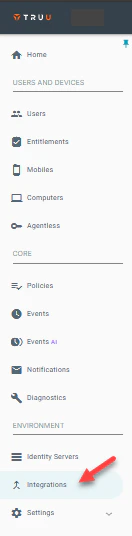
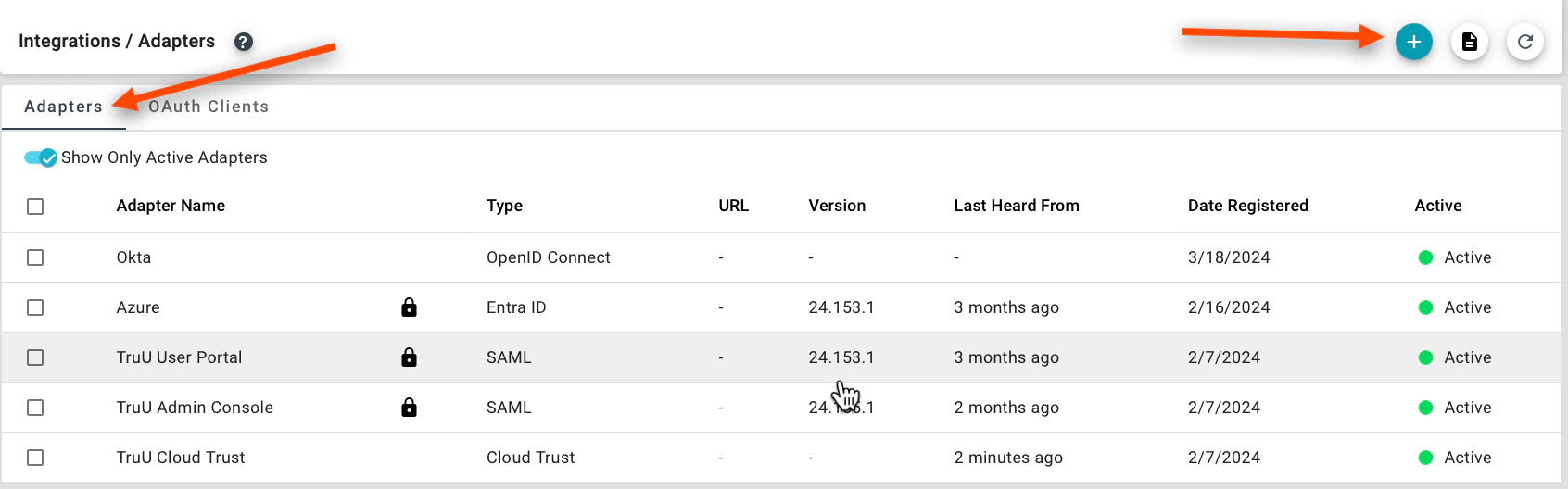
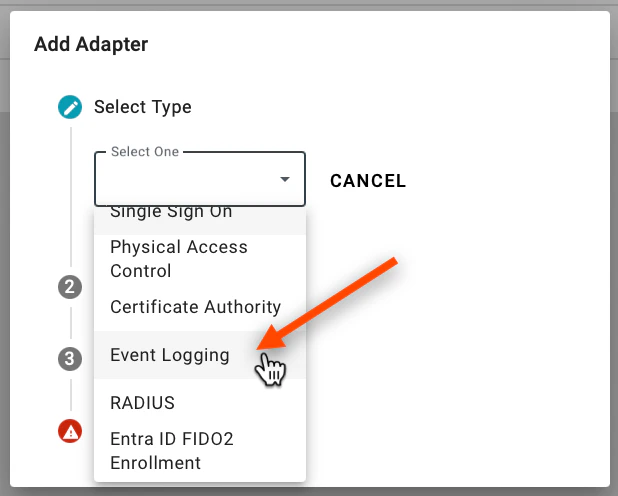
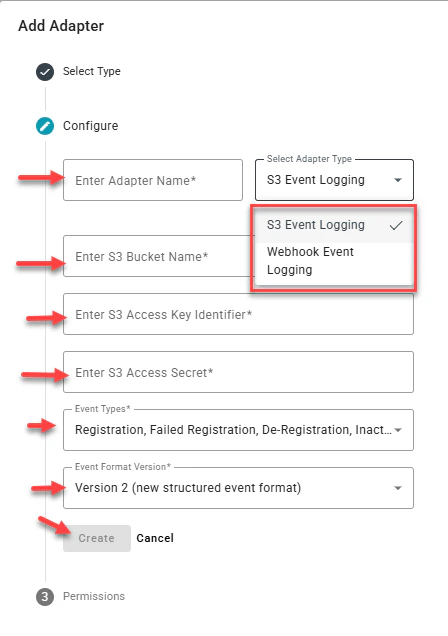
- The AWS service account configured for the adapter must have write permissions to the AWS S3 bucket.
- The AWS S3 access key and secret are encrypted and stored in Amazon’s Hardware Security Module (HSM).
- TruU exports events every 15 minutes. If an error occurs during an export, a notification message is displayed in the TruU management console. An error message will also be displayed if there is no event data for TruU to export.
- When the adapter is initially deployed, TruU will export events from the previous 7 days from which the adapter was first deployed.
Managing TruU S3 Event Logging Adapters
Step 1: To edit an existing TruU S3 Event Logging Adapter in your TruU Admin Console, click on the adapter instance. You’re then able to edit the adapter name, edit S3 bucket name, update S2 access key, update S3 access secret, and/or toggle the adapter from Active to Inactive. The adapter Version, when the adapter was Last Heard From, and the Date Registered are also available for each adapter from the Integration > Adapter menu. Use these parameters to monitor the operation of your adapters.Event Logging Structure
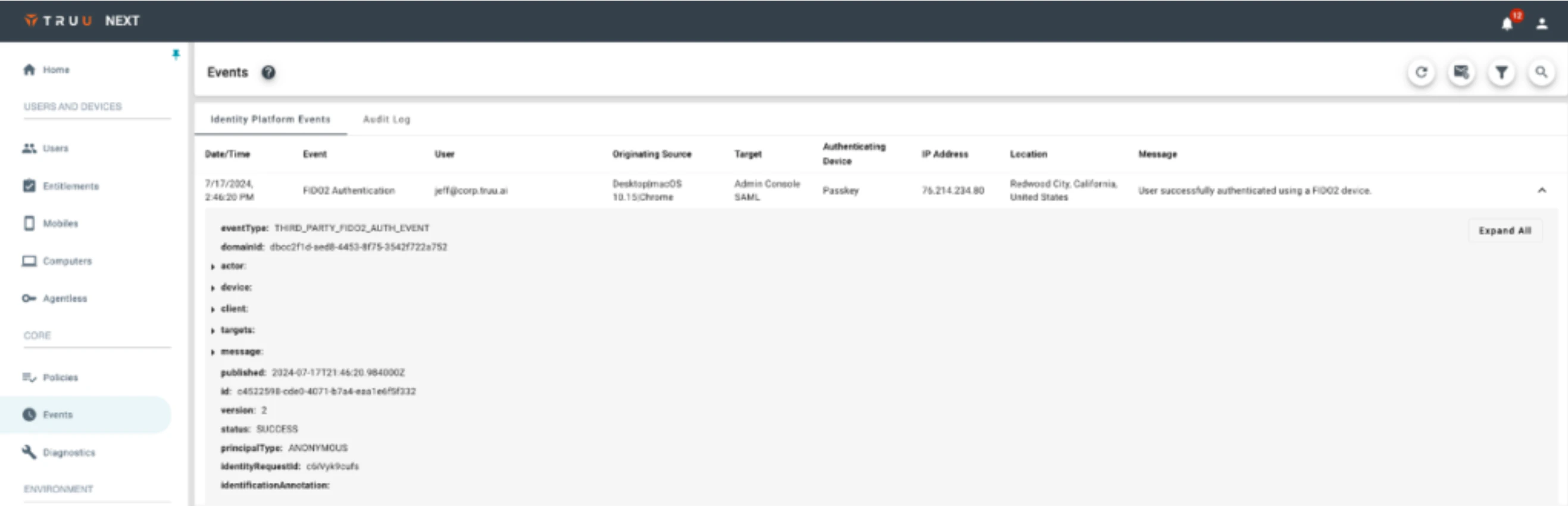
The expanded view of the data in the Events table now consists of the following elements:- Basic information about the event (e.g. Type, Domain ID, when the even was published, etc.).
- Actor: this is a new data object that represents the user (and expands to provide additional information about the user).
- Device: this is a new data object that represents the hardware used by the actor (and expands to provide additional information about the device.)
- Client: this is a new data object that represents the client (TruU Agent, App or browser) used by the actor (and expands to provide additional information about the client).
- Targets: this is a new data object that represents the targets (e.g., the resource the user was trying to access) used by the actor (and expands to provide additional information about the target).
- Message: this is the message included for the event.
PACS Adapter Webhook Event Logging Adapter Setup Guide